Borders & Transfers
Land border crossings: how the queue shifts across the day
 By
·
October 30, 2026
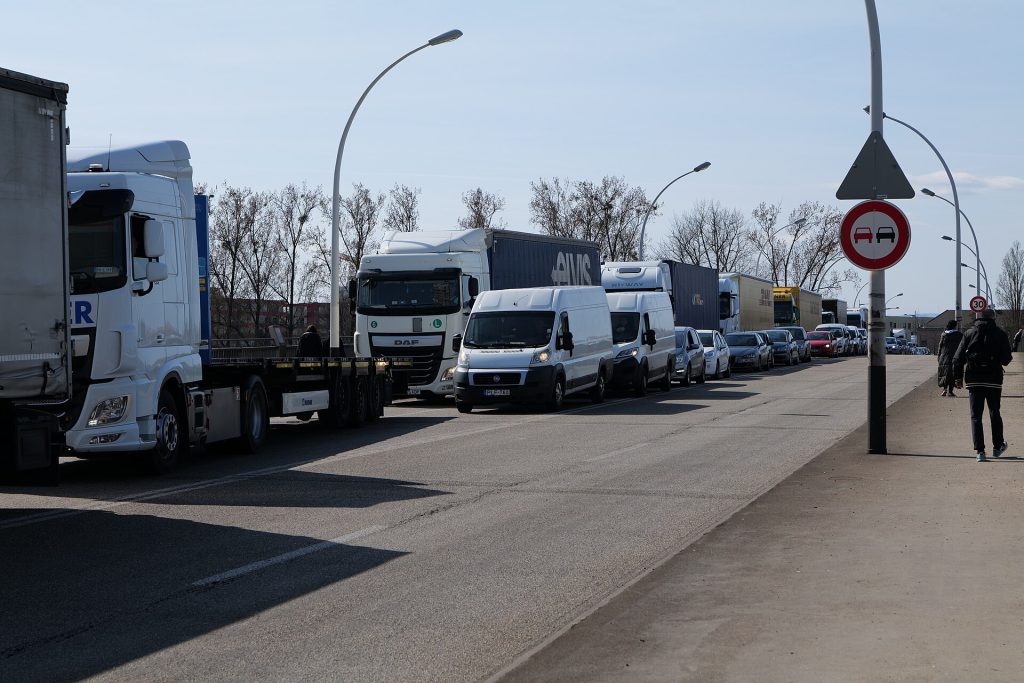
The queue at a land border follows a timetable, and that timetable is set by the other side’s shift change rather than by how many people are waiting. Arrive at the wrong hour and an hour of driving costs three hours of standing.
Early morning belongs to commuters
Between roughly five and eight, the front of the queue is local. Cross-border workers, traders with loaded vans, students crossing to a school on the other side. They know the officers, they have their documents already open, and they move in a steady rhythm that a foreign passport interrupts.
This is the fastest window for a foot passenger and the slowest for a car. The pedestrian lane often clears in twenty to forty minutes, while the vehicle lane fills with vans that have to be unloaded and inspected item by item.
Mid-morning is the freight peak
From about nine, lorries take over the commercial gate. On a road crossing that handles trade, the lorry queue can stretch for kilometres and take most of the day to clear. Passenger vehicles usually get their own lane, but the shared approach road does not, and the last kilometre before the barrier can be the slowest part of the journey.
Where a crossing has a separate passenger terminal, use it. Where it does not, walking across is often quicker than sitting in a car that cannot overtake anything.
The lunch hour is a real gap
Many posts run two shifts of officers with a handover in the middle of the day. Booths close one at a time rather than all at once, but the effect is visible: the queue stops moving, then doubles. A crossing that took thirty minutes at ten takes ninety at half past twelve.
The handover is not announced. You learn it by watching which booths go dark.
The two-stage structure is what most people underestimate. You queue for the exit stamp on the side you are leaving, travel a stretch of neutral road, then queue again for entry. The two queues are staffed separately and rarely equal in length, so a short first queue tells you nothing about the second.
Coaches and minibuses distort the picture further. A single arrival can put forty people into a lane built for walk-ins, and the lane then clears in a burst rather than a trickle. If a bus pulls in ahead of you, the wait resets.
Late afternoon brings the return wave
The commuters come back. Between four and seven, the direction that was empty in the morning becomes the busy one, and the direction you want may still be quiet. Check which side is peaking before you commit to a time, because the two directions rarely peak together.
Night is quiet until it is not
After about ten, staffing drops to a skeleton crew and one or two booths stay open. The queue is short but it moves slowly, and a single coach unloading forty passengers can hold the lane for half an hour. A night crossing is calm and unpredictable at the same time.
The exception is a border that shuts overnight. If the gate closes at midnight and reopens at six, the first hour after reopening is a crush of everyone who arrived early, and the wait then is worse than at any daytime hour.
What to check before you go
- Whether the crossing closes at night, and at what hour.
- Whether foot passengers and vehicles use separate gates.
- Which side is peaking in the direction you need.
- Whether a public holiday falls on that day.
A public holiday on one side cuts staffing on that side without changing the traffic on the other. The result is a queue that looks inexplicable until you remember the calendar.
Build the hour into the plan
The mistake is treating a land crossing as a fixed cost of forty minutes and booking the next leg on that assumption. The same crossing ranges from twenty minutes to three hours depending on when you arrive, and the difference is not luck.
Choose the hour first, then the transport that fits it. Where a timetable forces you into the lunch gap or the shift handover, allow for it in the schedule rather than hoping the queue will behave.