Visas & Entry
Yellow fever certificates and the papers checked at borders
 By
·
July 8, 2026
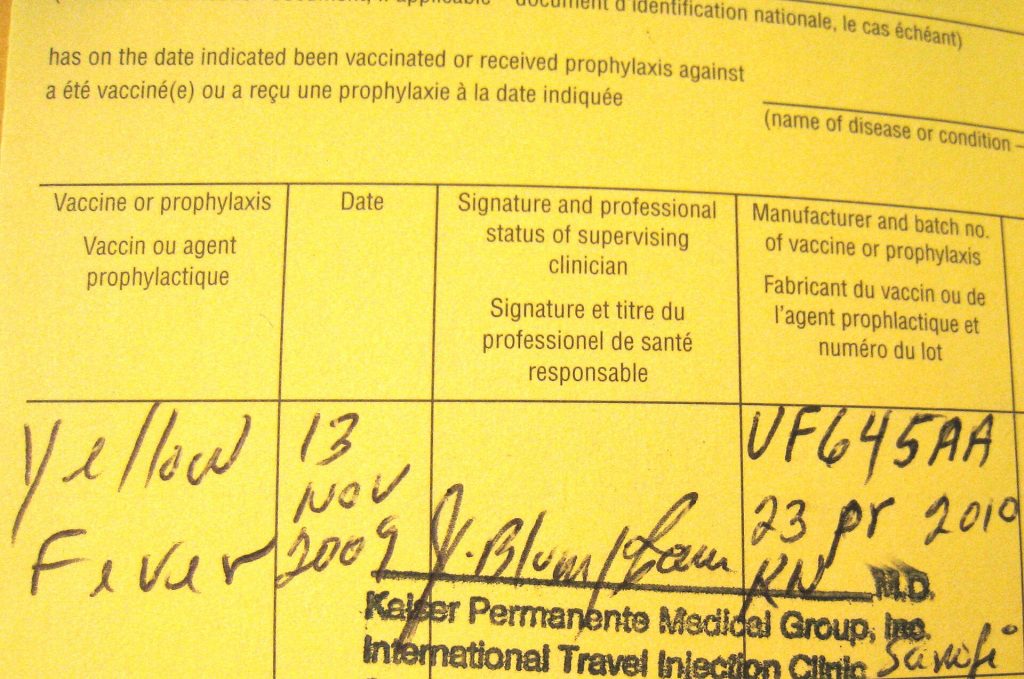
The yellow fever certificate is the one health document a border officer asks to see as a matter of routine, and the requirement follows where you have been rather than where you are from. That single detail catches more travellers than any other entry rule.
The rule follows your route
A country requires the certificate from arrivals who have spent time in a country where yellow fever is transmitted, including a long transit. The list of risk countries is published and does not always match the list travellers carry in their heads.
Some countries count an airport transit of more than a few hours; others count only the days you left the airport. Where the route passes through a risk country even briefly, the certificate is the simpler answer than an argument at the desk.
Ten days before you travel
The certificate becomes valid ten days after the vaccination, and that delay is written into the rule rather than into the clinic’s schedule. A vaccination given the week before departure can leave you valid on paper but not at the border.
Under current international rules the vaccination is recorded as valid for life, though older certificates may still show a ten-year expiry. Either way, the document is a small booklet with your details, the date, the vaccine batch and a stamp.
Clinic availability is the part that is easy to misjudge. In some cities the travel clinic is booked several weeks out, and the vaccine is not stocked at every practice, so the appointment is worth making in the same week as the visa one rather than after it.
Exemptions are paper, not permission
A medical exemption exists for people who cannot be vaccinated, and it is issued as a letter on official stationery by a clinic or public health authority. Some borders accept it; others apply quarantine or refuse entry, and the decision sits with the officer.
The exemption is not a shortcut for anyone who simply did not get round to the appointment. It is a medical document, and it is read as one.
Other papers at the same desk
A few countries require a meningitis certificate for pilgrims, a polio certificate for arrivals from certain countries, or a health declaration form during an outbreak. None of these is common on a general long-haul route, but each is enforced when it applies.
A small number of countries ask for travel insurance covering medical costs as a condition of entry, and check it by spot sampling rather than at every desk.
Children need their own documents rather than a line on an adult form, including a certificate in their own name where yellow fever applies. A family travelling on one record is a family that gets separated at the desk while the paperwork is checked.
Airlines enforce it more strictly
Check-in staff carry the cost of flying you home if you are refused, so the certificate is usually looked at before boarding rather than on arrival. A missing document found at the gate is a missed flight; the same document missing at the border is a longer conversation.
Because the check happens at departure, the certificate has to be in hand, not in an email or a photograph on a phone. Paper remains the format that is accepted everywhere.
Keeping the record with the passport
The certificate is easy to leave in a bag that gets checked, and replacing it from abroad means finding a clinic that can reissue from a record it may not hold. Keep it with the passport, and photograph the pages in case the booklet is lost.
The photograph is a backup, not a substitute. A border that wants a stamp wants the booklet.
Check that the name on the certificate matches the passport exactly, middle names included. A clinic typo is a document that gets questioned at the desk, and correcting it afterwards means going back to the issuing clinic rather than to any clinic.
Health entry rules are narrow, specific and checked against a list. The list follows the route, which means the only reliable way to answer the question is to read it against the countries you actually pass through.