Borders & Transfers
Entry stamps and arrival cards: keeping the paper a border may ask to see
 By
·
June 20, 2026
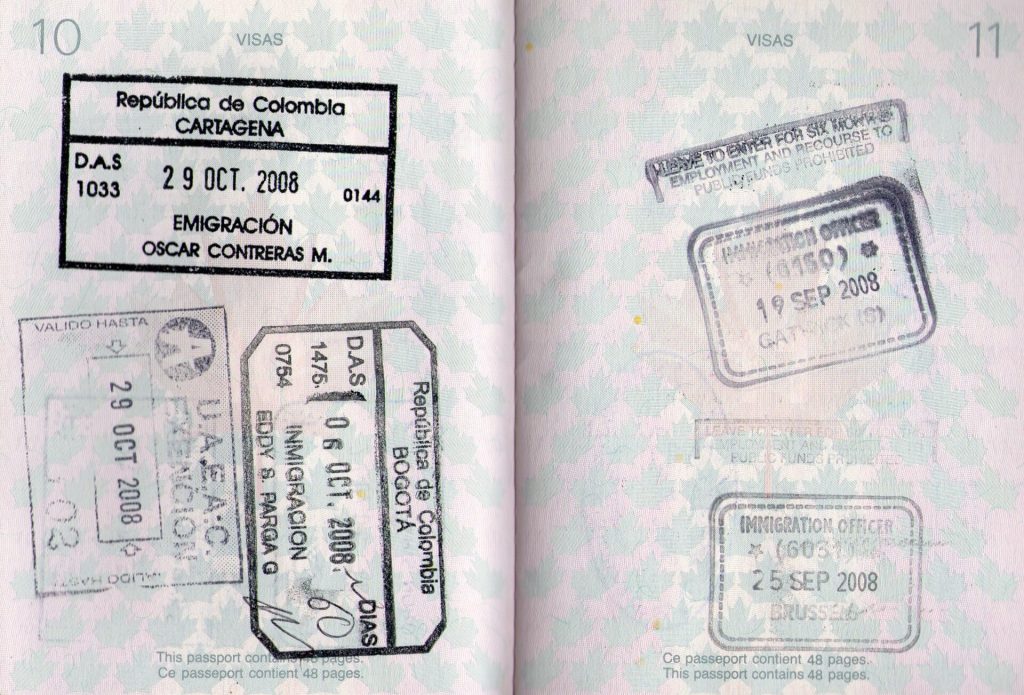
The stamp is one document among several, and the paper you throw away at the airport is often the one that is asked for weeks later. A border officer can rebuild a trip from stamps alone, but the arrival card, the hotel slip and the exit receipt fill in what a stamp cannot show.
Arrival cards come in two parts
Many countries still issue a paper arrival card on the aircraft or in the hall. It is printed as one form with a perforated or carbon-backed half, and the officer keeps one side while the other comes back to you, sometimes stapled into the passport.
That stub carries the entry number and the length of stay you declared. Keep it inside the passport rather than a pocket, because the number on it is what an officer reads when a stamp is faint or printed over another.
The entry stamp is a record, not a formality
Read the date and the permitted period before you leave the desk. Stamps are written by hand in some places, and a date entered a day out is corrected by a second officer at the counter, not by anyone at an airport three weeks later.
Check too that the stamp is legible and in the correct passport. A mark on an odd page is still valid, but it invites a conversation you would rather not have at the end of a long flight.
Keep the exit evidence as well
Several countries no longer stamp on departure, or stamp only when asked. If proof of leaving will matter, ask for it. An exit stamp, a boarding pass or a dated coach ticket all establish that you left when you said you did.
This matters most for anyone returning to a country that counts days. With no record of departure, the count can restart from the last entry in the system, and the allowance you thought you had is gone.
Exit fees leave a receipt
A few land borders and smaller airports still collect a departure charge in cash at a separate window. Pay it and keep the receipt with the passport until you are through the far side, because it is the only proof of payment if the gate asks a second time.
Where a departure card is still in use, the same care applies. Handing over the wrong half is common and holds up everyone behind you.
Registration slips prove where you slept
Hotels and guesthouses in many countries register foreign guests with the local police and give you a slip or a scanned copy at check-in. Keep it. A border post or an extension office may want evidence of accommodation covering the nights you have already spent in the country.
Where the registration is filed for you, that slip is often the only paper carrying both your name and an address in the local script.
Photograph everything on the day
Photograph the entry stamp, the arrival stub, the registration slip and the visa page, and store the images where you can open them without a data connection. Paper gets lost, washed, or left in a hotel safe in another town.
A photograph is not a substitute for the document at a desk, but it is enough to answer a question, start a replacement form, or settle a date with an airline counter.
A folder that survives the route
One plastic sleeve in the bag, holding the passport copy, the card stubs, the receipts and the slips, kept in the same place for the whole trip. It takes ten seconds at each check-in and removes the search through four pockets at a counter.
The stamp is the headline of the page, but the trip is proved by the smaller papers filed around it. Keep them until the last border rather than the first laundry day.