Regional Costs
Three tiers of food cost and what each one buys
 By
·
July 16, 2026
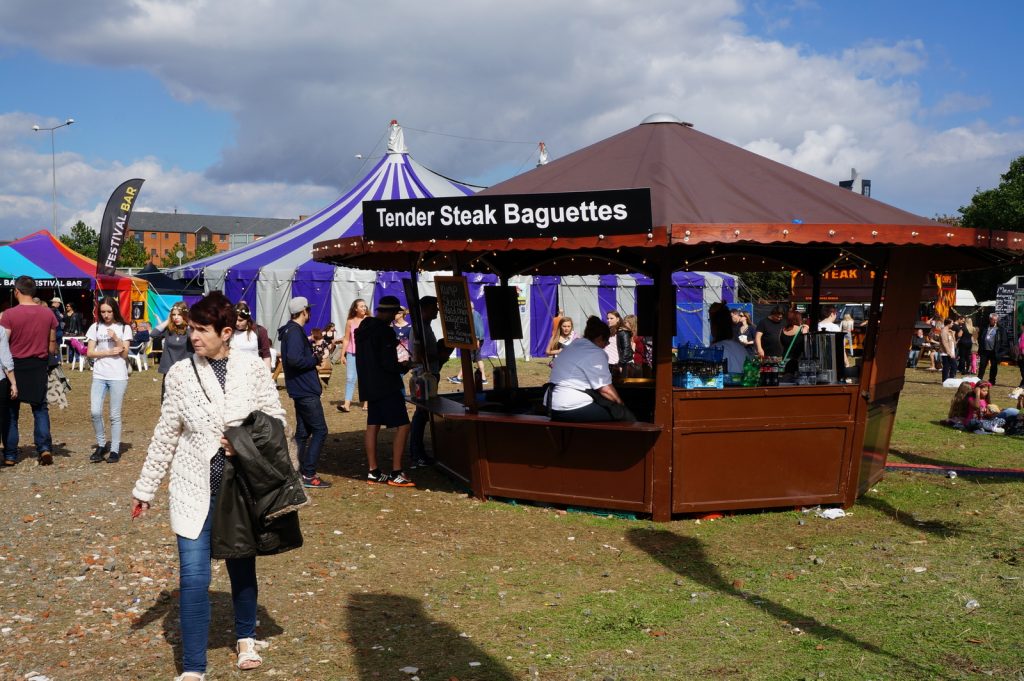
Food splits into three price tiers nearly everywhere, and the gap between them is a multiple rather than a margin. Street, canteen and restaurant are not variations on the same meal. They are three separate supply chains with three cost structures.
That matters for a long trip because the tier you eat at most days determines the food line far more than the country does. A traveller eating at the middle tier in an expensive city can spend less than one eating at the top tier in a cheap one.
The tier gap is a multiple
In most regions the street tier costs one unit, the canteen tier two to three, and the restaurant tier five to ten. The multiples hold across countries far more reliably than the absolute prices do.
Learn the price of one street meal in a country and you can estimate the other two within a usable range before you arrive. That estimate survives currency changes better than a copied daily figure.
Street food prices the floor
Street food is cheap because it has no seating, no service and a short menu. A bowl, a filled flatbread, a grilled skewer: roughly 1 to 6 in much of Asia, Latin America and parts of Eastern Europe, and 8 to 15 in wealthy cities where the format survives at all.
The tier is priced for volume and local wages, so it tracks the neighbourhood more closely than the city. A stall near an office district charges what office workers will pay.
Canteens price the working day
The middle tier is the one travellers use least and should use most. Staff canteens, market food halls, lunch counters, university cafeterias and set-lunch restaurants serve a full plate at two to three times street price and about half the restaurant price.
They exist wherever there is a workplace, which is most of a city. The constraint is timing: many close by mid-afternoon and shut at weekends, so the tier rewards a lunch habit.
Restaurants price the evening
The top tier is not only better food. It is rent, staff, table linen and a licence. A dinner in a mid-range restaurant typically runs five to ten times a street meal in the same city, and the multiple is widest where street food is cheapest.
This is where budgets break. Two restaurant meals a day in a cheap country can cost more than three canteen meals a day in an expensive one.
Drinks widen the gap
Beverages follow a different curve. Water and tea stay cheap at every tier. Beer, coffee and soft drinks in a restaurant can add 30 to 50 percent to the bill, and they are the item most often left out of a food estimate.
A country with cheap food and expensive alcohol is common, and it inverts the tier logic after dark.
Self-catering sits below all three
- Market produce and bread: below the street tier
- Supermarket prepared food: between street and canteen
- Convenience store meals: canteen price, lower quality
- Restaurant leftovers: the cheapest meal of the week
Cooking only wins where there is a kitchen, and a kitchen is an accommodation decision. In a hostel with a shared stove the saving is real, but the time cost is an hour or two a day. The break-even sits at roughly three cooked meals a week; below that, the shopping trips and the washing up cost more than they return.
Pick a tier, then a region
Decide which tier you will eat at most days, then look up that tier’s price in the region rather than the region’s average food cost. The average describes a mix you are not going to eat.
The three tiers exist everywhere, at different prices and in different proportions. What moves a food budget is the tier you live in, not the country you are standing in.