Rail & Buses
Which payment cards clear when you book rail tickets abroad
 By
·
July 22, 2026
The card that fails on a foreign rail site is usually a debit card with no travel flag, and the failure arrives as a generic error rather than a clear decline.
Card networks are not the problem
Most national rail operators accept the major international card networks online. What blocks a booking is rarely the network and almost always the issuer: a bank that has flagged the merchant as foreign, a card not enabled for cross-border e-commerce, or a daily limit set for domestic spending.
Credit cards clear more often than debit cards. Debit payments are authorised against a live balance, and foreign rail sites often pre-authorise slightly above the fare, which a thin balance will not cover.
A card from a bank in the country you are booking in clears almost every time, which is why some travellers keep one tied to a local account. Without that, a card marketed for travel is the next best choice, because those issuers expect foreign merchants and set their fraud rules accordingly.
Three-dimensional checks decide it
Online rail payments usually run a verification step where the issuer sends a code to your phone or asks for a password. If the number on file is a landline, or the phone cannot receive the message while you are travelling, the payment stalls after the fare has already been held.
Test that step before you need it. A card never used for a foreign purchase is the most likely to be stopped, so one small purchase a week earlier saves more than a support call at the platform gate.
The code step also fails on a phone with no roaming. If your number sits on a contract that charges for incoming messages abroad, the message may never arrive, and the site will show a timeout rather than a reason.
Currency choice costs you twice
Many rail sites offer to charge you in your home currency. The rate behind that offer is set by the site or its payment processor, not by your bank, and it is normally two to four per cent worse. Pay in the currency of the country whose railway you are booking, and let the issuer convert.
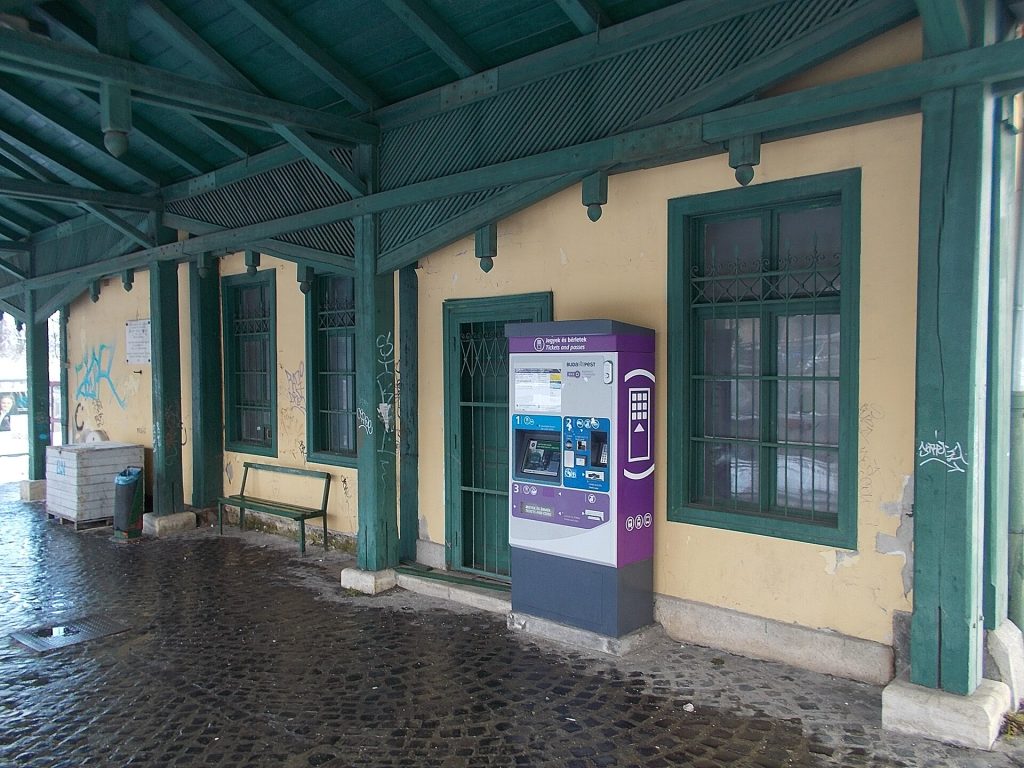
The same trap sits at the ticket machine and at the counter. The prompt is phrased as a convenience, and the default option is the expensive one.
When the operator only takes local cards
Some operators, particularly on regional and suburban networks, accept only cards issued in the country, or require a domestic payment scheme. The workaround is a reseller, which adds roughly five to ten per cent, or a counter or machine after arrival.
Buying after arrival is fine outside peak periods and risky inside them. Seat reservations on long-distance services sell out days ahead, and the cheapest fares are tied to a specific train.
Collecting tickets without the card
Where a ticket is collected at a machine, the machine may ask for the card used to pay as proof of purchase. If that card has since been replaced, or was a virtual number that expired, collection fails and the booking has to be reissued at a desk.
Choose an e-ticket with a code where the option exists, and keep it offline as well as in the inbox. A screenshot on the phone works when the network does not.
What to do when payment fails
Three attempts on the same card in a row often trigger a block that outlasts the booking window. Stop after the second failure and call the issuer, which can see the pending authorisation and release it.
Keep a second card from a different issuer in reserve, and carry it separately. A block on one issuer rarely affects the other, and a booking held for ten minutes can usually be paid with the spare.
A rail pass bought at home removes most of this, since the pass is paid for once and the reservations that follow are small. The card in your pocket is only useful if the issuer knows it is abroad before the railway asks for money.